


Varicose veins of the small pelvis is a common disease that affects many women between the ages of 25 and 40.Otherwise, the disease is called chronic pelvic pain syndrome or pelvic venous congestion syndrome.The cause of this problem is the backflow of blood through the ovarian vein, which occurs as a result of the compression of blood vessels.That is, venous dilatation of the pelvic veins is a disease that is directly related to a decrease in the elasticity of the vein wall.
Many doctors consider this pathology something exotic and make such a diagnosis extremely rarely.This is explained by the fact that the pathology can be manifested by various symptoms and a strong pain syndrome always prevails.That is why most experts replace varicose veins of the pelvic organs with various hormonal or gynecological diseases of an inflammatory nature.However, the quality of a woman's life and the possibility of having children in the future depend on the timely diagnosis of varicose veins of the small pelvis.Why does this disease develop, what symptoms are manifested and how to treat pelvic varicose veins?We will talk about all this in this article.
Features of the development of varicose veins of the pelvis
Such a phenomenon as dilated ovarian and uterine veins has been known in medicine for a long time.This disease was first identified in the 80s and has not been fully studied to this day.And every year, cases of this pathology become more and more common, because the lifestyle of most people has changed during that time.Today, most people have sedentary jobs and lead unhealthy lifestyles.The mechanism of varicose veins of the small pelvis is triggered by various hormonal changes, as well as the increasing pressure of the uterus on the blood vessels of the small pelvis, which is usually observed during pregnancy.
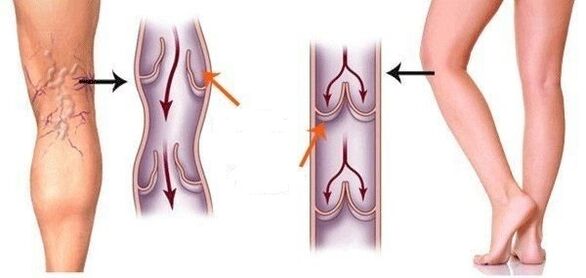
Clogging begins to occur in the vessels of the pelvis, which causes the development of the disease.
The algorithm for the development of pathology is as follows:
- The vascular system of the small pelvis is quite complex and consists of large vessels, which in turn are divided into smaller veins.Moreover, the structure of the pelvis in women and men is somewhat different, which explains the occurrence of this disease mainly in women;
- there is compression of blood vessels, as well as clogging of veins, due to which the tone of the vascular walls changes, and the process of blood flow from the deep veins of the pelvis is disturbed;
- due to failure of the pelvic vein, they cannot perform their functions properly.This leads to the progression of venous valve insufficiency;
- congestion begins to appear in the vessels of the pelvis, which leads to the development of varicose veins of the small pelvis.
Unlike varicose veins of the legs, which are accompanied by bulging veins in the lower extremities, varicose veins of the pelvis in women go unnoticed, because the veins located deep in the pelvis are affected.Therefore, many women may not even suspect that they have this pathology.But there is still a main symptom that indicates the presence of a problem in almost all cases.And this symptom is pain, which is characterized by intensity and duration, and is usually observed before critical days or after heavy physical exertion.
Causes of pelvic venous congestion syndrome development
As mentioned earlier, the disease mainly occurs due to changes in the hormonal level.And women of reproductive age are most sensitive to the development of this pathological process.Pregnant women and women who work in difficult physical conditions are especially susceptible to enlarged pelvic veins.In some cases, this type of varicose veins can develop during adolescence, which is also accompanied by changes in hormonal levels.

The most common cause of the disease is pregnancy.
But unlike the course of the disease in adulthood, in this case the pathology is asymptomatic.And the only thing that allows you to suspect the existence of a problem is an increase in the amount of vaginal discharge.That is, we can say that the main reasons for the development of varicose veins of the small pelvis are hormonal changes in the body and pregnancy.But there are also some other reasons for the development of the disease:
- congenital connective tissue dysplasia.This phenomenon is observed in 30% of people and is characterized by the thinning and curvature of the veins, as well as the weakness of the venous valves;
- difficult or multiple births.Various complications during the birth process or the birth of a large fetus lead to blood flow disorders in the veins of the small pelvis;
- pregnancy with multiple fetuses at the same time.This leads to an increase in the load on the body, especially on the vessels of the pelvis;
- some gynecological diseases;
- long-term use of hormonal contraceptives;
- treatment with hormonal drugs;
- retroflexion of the uterus.
There are also the following factors that cause the development of pelvic varicose veins:
- severe physical stress, such as constant heavy lifting;
- standing or sitting work;
- sedentary lifestyle;
- increased estrogen levels;
- sexual dysfunctions, such as lack of orgasms;
- frequent use of interrupted intercourse.
But the most common cause of the development of pathology is still pregnancy.During this period of life, almost 30% of women suffer from chronic pelvic pain syndrome.Basically, symptoms of the disease begin to appear after 8 weeks of gestation.
Classification of diseases
Depending on the nature of the flow, varicose veins of the small pelvis can be of two forms:
- varicose veins of the perineum and external genitalia.If the disease progresses, varicose veins can spread to the inner surface of the thigh;
- venous pelvic congestion syndrome.
This classification is not widespread in medicine, because both of these forms arise simultaneously as a consequence of each other.Varicose veins of the vulva are quite often observed in pregnant women, and in most cases the pathology disappears on its own after childbirth, but not always.Depending on the size of the damaged veins and the location of the pathology, there are 3 stages:
- first degree.The damaged vein reaches a diameter of no more than 5 mm, is localized in any venous plexus of the small pelvis and is characterized by a corkscrew in the form of blood vessels;
- second degree.The diameter of the vein can be from 6 to 10 mm and is usually observed in the overall type of varicose veins, localized in the ovaries or uterus;
- third degree.The damaged vein exceeds 10 mm in diameter with total varicose veins or major localization.
Depending on the degree of development of the disease, the appropriate method of treatment is selected.For the first and second degree of varicose veins of the small pelvis, the doctor usually prescribes conservative treatment consisting of lifestyle changes, special exercises and the use of medications.But the third stage of the pathology can be cured only by surgery.
Symptoms of varicose veins of the pelvis
A disease such as varicose veins of the pelvis, whose symptoms are varied, is often disguised as other diseases of the reproductive system.The main sign of pathology is severe pain in the lower abdomen, which appears for no reason and can radiate to the lumbar region or perineum.Also, the pain is usually accompanied by unfounded mucous discharge from the vagina, which intensifies in the second phase of the menstrual cycle.
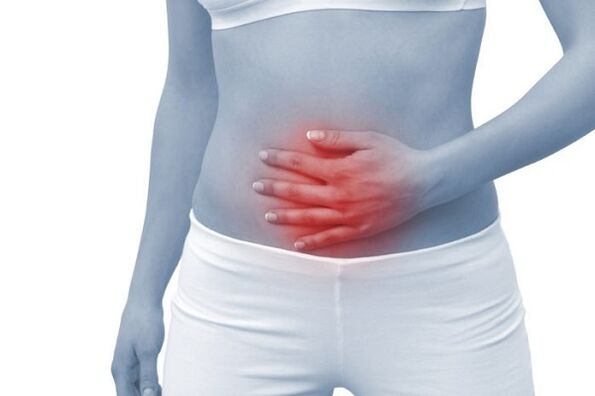
Symptoms: severe sharp pain in the lower abdomen before and during menstruation.
Also, if there are varicose veins of the pelvis, the symptoms may be as follows:
- severe sharp pain in the lower abdomen before and during menstruation;
- increased sensitivity of the perineum and vagina;
- menstrual irregularities;
- a feeling of heaviness in the pelvis when standing for a long time;
- itching and discomfort in the vulva area;
- the presence of bulging veins and spider veins on the perineum, characteristic of varicose veins;
- unpleasant sensations, discomfort during intimacy.
There may also be problems with childbirth and disturbances in the process of urination, for example, increased frequency.And in the case of such a form of the disease as enlarged veins of the genital organs, bleeding and acute thrombophlebitis of the perineal veins may occur.Symptoms can be mild or severe, and either a single symptom or a whole complex of symptoms can be observed.This is what makes it difficult to diagnose such a phenomenon as varicose veins of the pelvic organs in women.
Consequences of varicose veins of the pelvis
This type of varicose veins is not an extremely dangerous disease.And a timely diagnosis of the pathology will allow you to quickly get rid of the unpleasant phenomenon with the help of a properly selected course of treatment.But it is usually quite difficult to recognize the disease in time, and many women live with this problem without even knowing it.And as the disease progresses, the following serious complications begin to develop in the body:
- dysfunction of the reproductive system, which leads to infertility;
- neurasthenia as a result of pain syndrome;
- fear of intimacy due to constant pain during sexual intercourse;
- inflammation of the uterus and appendages;
- bladder diseases;
- uterine bleeding.
Varicose veins of the pelvis in women, without proper treatment, continue to develop and spread to neighboring organs and parts of the body.And in 5% of cases there is a chance of developing venous thrombosis and pulmonary embolism, which are fatal diseases.
Diagnosis and treatment of pelvic varicose veins
Due to the generality of the symptoms and the location of the symptoms of the disease, varicose veins of the small pelvis are quite difficult to diagnose.And just 20 years ago, the correct diagnosis was made in only 2% of cases.Incorrect diagnosis of the problem sometimes led to the removal of the uterus, which could have been avoided with the use of modern diagnostic equipment.Today, in order to make a correct diagnosis, a complete comprehensive examination is carried out with the participation of a gynecologist and a phlebologist.
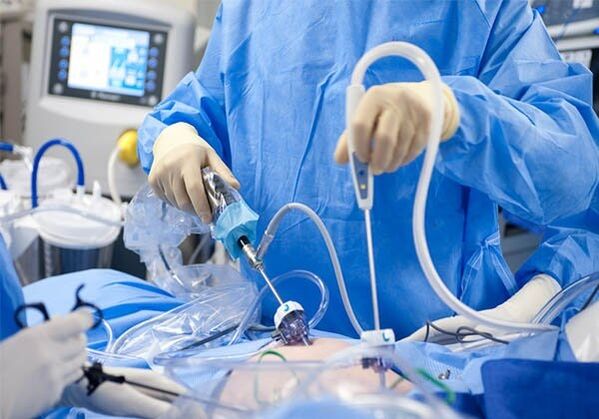
A popular type of disease treatment is laparoscopy.
After a detailed interview and examination of the patient, the doctor prescribes the most accurate methods for diagnosing varicose veins of the pelvis today:
- laparoscopy;
- phlebography;
- Dopplerography of blood vessels;
- Ultrasound of the venous system;
- selective ovariography;
- computed tomography and MRI;
- Varigraphy.
The doctor may also prescribe additional tests, such as blood tests and X-rays, which can help in a more accurate assessment of the patient's condition.After establishing the correct diagnosis, the doctor selects the most appropriate treatment, the purpose of which is:
- normalization of vascular tone;
- improvement of tissue blood supply;
- elimination of symptoms;
- preventing the development of congestion and various complications.
Treatment of varicose veins of the pelvic veins should be comprehensive and may consist of medical and basic therapy, surgery, as well as treatment with folk remedies.The basic therapy of the disease includes:
- regular therapeutic exercises;
- special diet;
- contrast shower;
- wearing special underwear.
Also, if necessary, you should review your daily routine.If the cause of the development of varicose veins is physical stress due to the specifics of the job, it is necessary to switch to lighter work.Treatment of varicose veins of the pelvis with drugs consists of the use of the following drugs:
- phlebotonics;
- enterosorbents;
- antioxidants;
- phleboprotectors;
- hormonal drugs.
Surgical intervention is prescribed only in the advanced stage of varicose veins, if conservative treatment is ineffective or if it is impossible to remove the pain syndrome.Among other things, the doctor may recommend the use of herbal preparations containing dandelion, horse chestnut or chaga.